


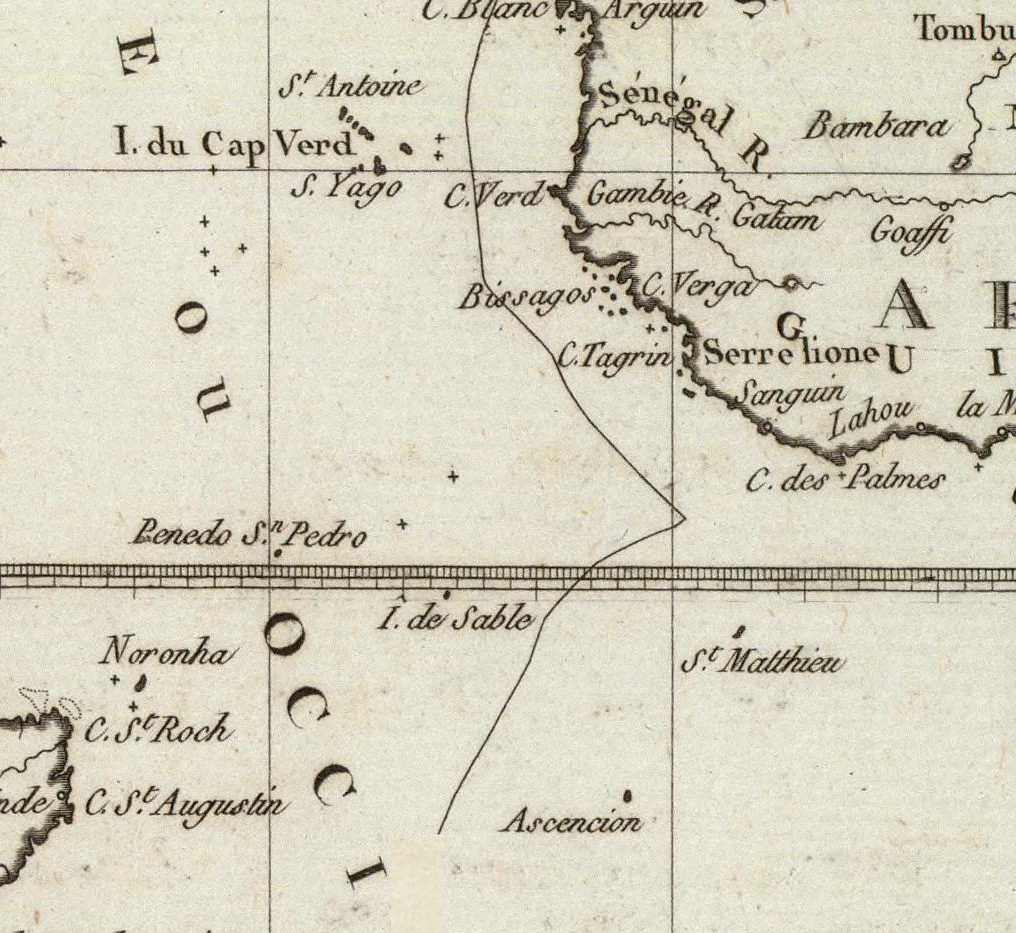
In September 1785, the scientific expedition led by Jean-François de Galaup, Comte de Lapérouse, aboard the frigate La Boussole (accompanied by L’Astrolabe, commanded by Paul-Antoine Fleuriot de Langle), ventured into the tropical Atlantic towards the Southern Hemisphere. Following their departure from Brest on 1 August 1785 and a stopover in Tenerife, in the Canary Islands, in mid-August, September marked the expedition’s first major ocean crossing. It was a month of steady routines, dictated by the daily demands of sailing, the search for the trade winds, and the looming threat of tropical diseases as the ships approached the equator.
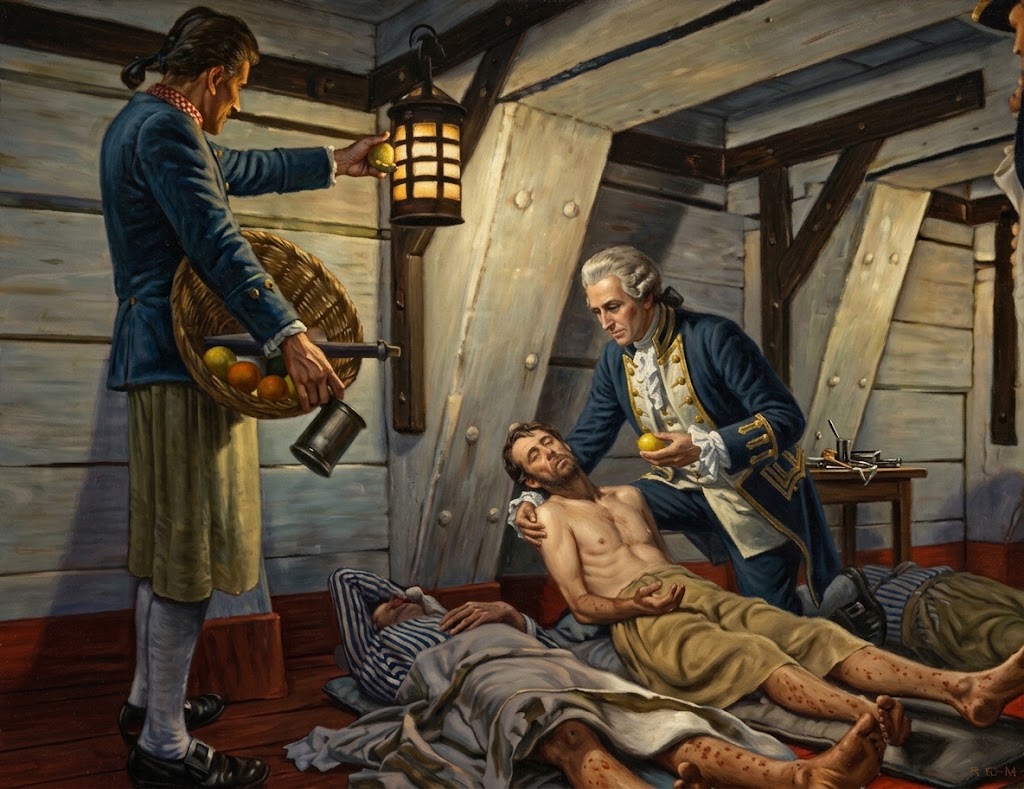
1. Hygiene, Naval Medicine and Crew Management on Board
To prevent scurvy and illnesses associated with tropical humidity, Lapérouse enforced strict health and hygiene measures on board:
- Scenting and Ventilation of the Lower Decks: Carried out daily to purify the air below deck.
- Repeated Clearing of the Decks: Carried out daily from 8 a.m. until sunset to ventilate, sanitise and dry the living quarters.
- Organisation of Work in Three Watches: The crew was divided into three watches to ensure that each man could enjoy eight consecutive hours of rest after four hours on watch. Lapérouse nevertheless notes that, because the crew had been reduced to the bare minimum, this arrangement could only be maintained in calm seas, forcing him to revert to the former system during stormier passages.
Did You Know? Scenting the Decks and the Miasma Theory
In the 18th century, naval medicine was still based on the air-borne theory of “miasmas”: it was believed that diseases spread through the stagnant, foul air of the ship’s holds. To purify the air, vinegar, tar or gunpowder was burned between decks. Although the antiseptic effects of these fumigations were limited, the process required the systematic cleaning and drying of the living quarters, destroying the habitats of fleas, lice and mould and thereby helping to protect the sailors’ health.
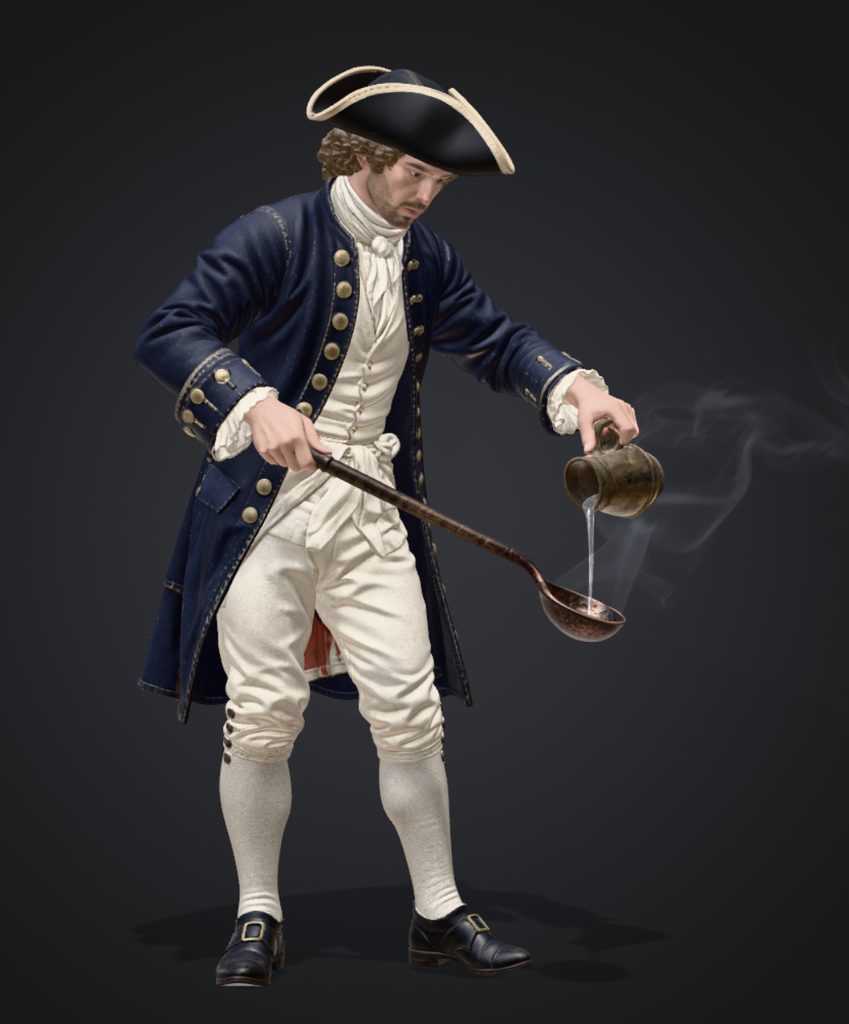
Historical 3D reconstruction created by Nicolas Gosset – 2026.
“Take advantage of fine weather to fumigate the holds and lower decks, taking the necessary precautions to prevent fire-related accidents and to ensure that those entrusted with this operation do not suffocate […]To this end, after the operation, before re-entering the holds, they should be ventilated using one of the methods we have proposed. It would also be advisable to test the air with a lighted candle to ensure that it has been restored to a condition suitable for breathing.”
Henri-Louis Duhamel du Monceau, Means of Preserving the Health of Ship Crews, with Instructions on How to Purify the Air in Hospital Wards, Paris, published by H.-L. Guérin and L.-F. Delatour, 1759.
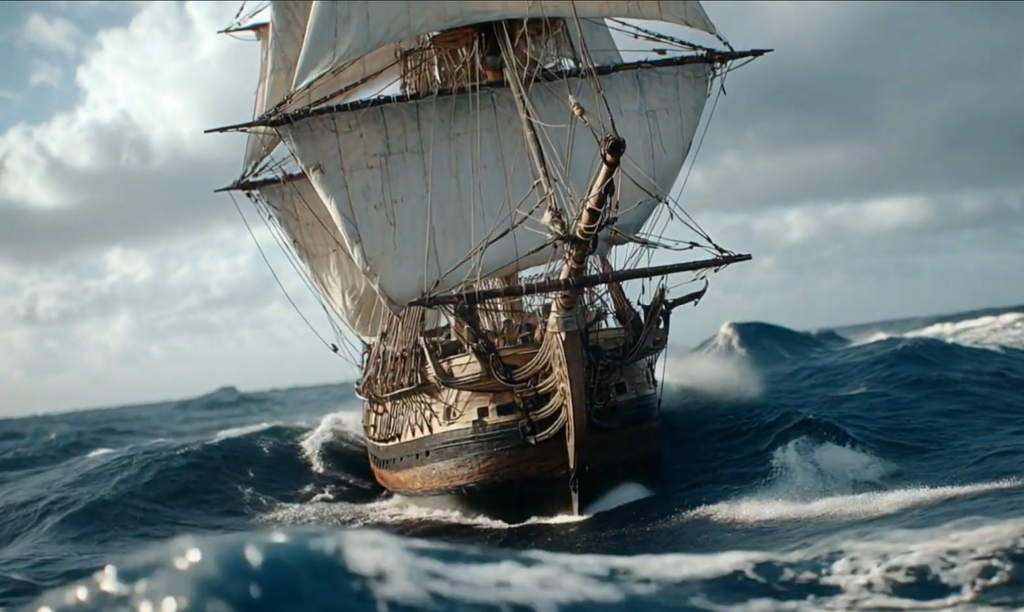
2. Navigation, Meteorology and Equatorial Hydrometry
From a hydrographic and meteorological perspective, the observations recorded in September 1785 challenged several widely held assumptions among navigators of the time:
- The Trade Winds and the Intertropical Convergence Zone: The north-e easterly trade winds abandon the ships at 14° north latitude. Between this point and the Equator, the winds blow consistently from the west to the south-west, forcing the squadron — comprising two ships of the French Royal Navy — to sail along the African coast at a distance of approximately 60 leagues (around 330 kilometres).
- The Myth of the Equatorial Calms: Contrary to the fears shared by most sailors, who dreaded long weeks of becalmed conditions beneath the Equator, Lapérouse noted that he had not experienced a single day without wind.
- Freshwater Supply: The expedition encountered rain only once during its crossing of the Equator. The rainfall was heavy enough for the crew to collect the rainwater and fill twenty-five casks with fresh water.
3. Scientific Fishing and Zoological Observations
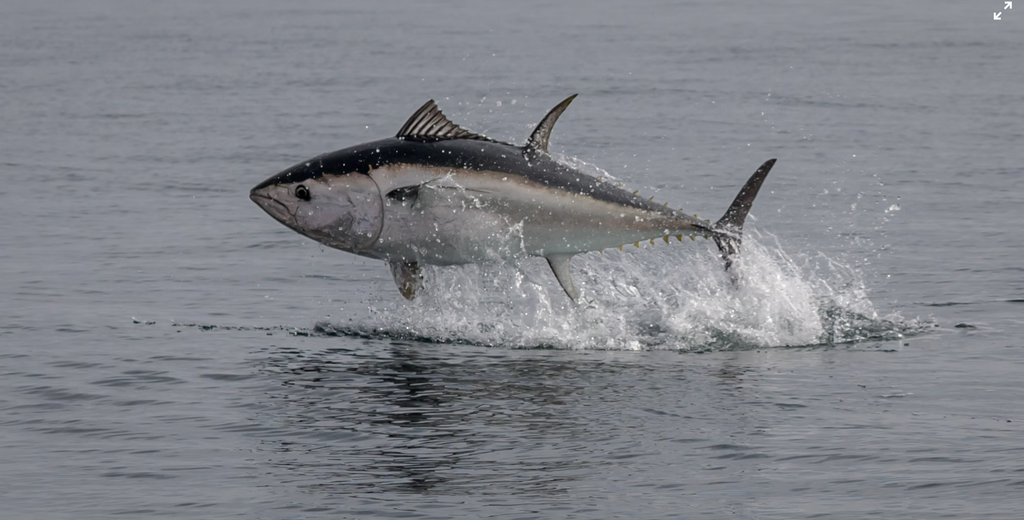
Between 8° north latitude and 3° south latitude, the two frigates were accompanied by an abundance of marine and pelagic wildlife:
Ornithology: Large numbers of birds identified as frigatebirds (Fregatidae) followed the ships across more than 11 degrees of latitude.
Ichthyology and Technical Limitations: The ships sailed through schools of exceptionally large tuna. Lapérouse noted the difficulties of fishing for them: the fish were so powerful that they snapped the trolling lines. The few specimens successfully caught weighed at least sixty pounds (approximately 30 kg).
4. Crossing the Equator and the “Equator Baptism”
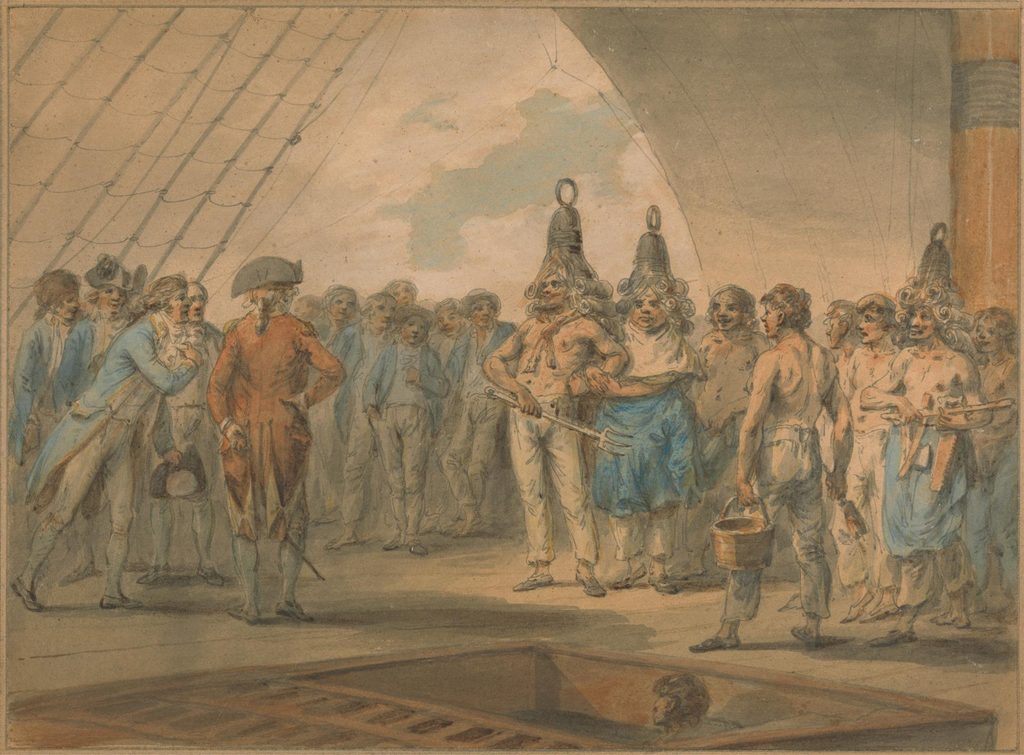
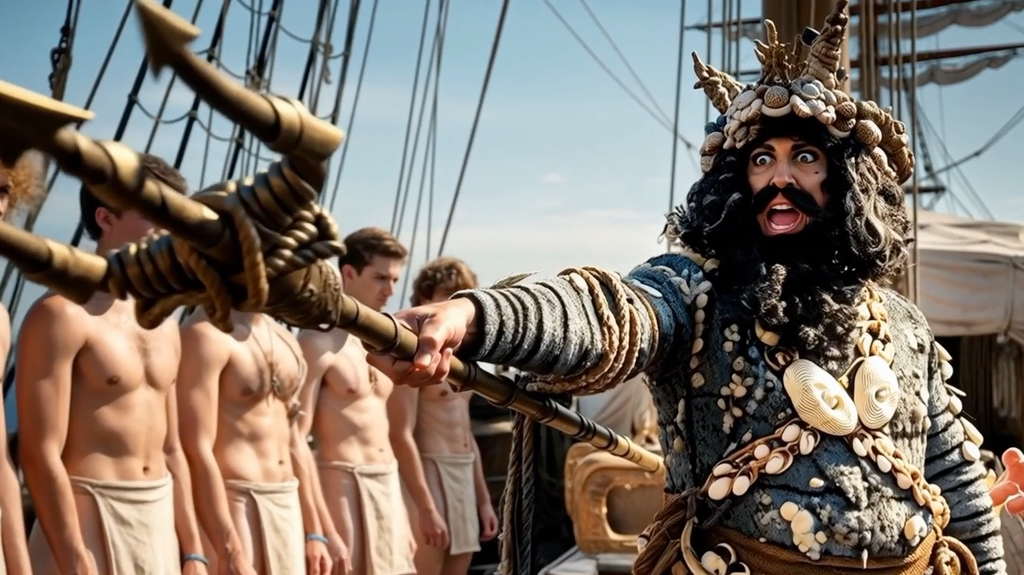
On 29 September 1785, La Boussole and L’Astrolabe crossed the Equator at 18° west longitude. In his account of the Equator crossing in September 1785, Lapérouse makes no mention of an “Equator baptism” ceremony. Yet this maritime tradition was already long-established and well known in the 18th century. It involved subjecting sailors crossing the Equator for the first time to a mock ceremony, sometimes presided over symbolically by the “Old Man of the Line” or Neptune. These maritime traditions associated with crossing the Equator have also been depicted in cinema, notably in The Bounty (1984), starring Mel Gibson and Anthony Hopkins. Simon Adams portrays Thomas Heywood, who is shown taking part in the crossing-the-line ceremony, during which newcomers undergo the mock trials traditionally associated with Neptune’s court.
5. Cartography and Chronometry: Surveying Reefs and Measuring Time
In September 1785, the expedition tested the accuracy of its astronomical navigation instruments:
Verification of a Suspected Shoal: Following his astronomical position, Lapérouse sailed directly over the shoal where the ship Le Prince had reportedly struck bottom in 1747. Finding no signs of land or breaking waves, he was able to disprove this erroneous information on nautical charts.
Longitude Calculations and Marine Chronometers: By comparing measurements obtained through the lunar distance method (using sextants and reflecting circles) with readings from Ferdinand Berthoud’s marine chronometer No. 19, the navigators recorded a very small discrepancy of 12 arcminutes. This scientific precision would enable them to determine the geographical positions of the Martin Vaz Islands and the island of Trinidad with great accuracy.
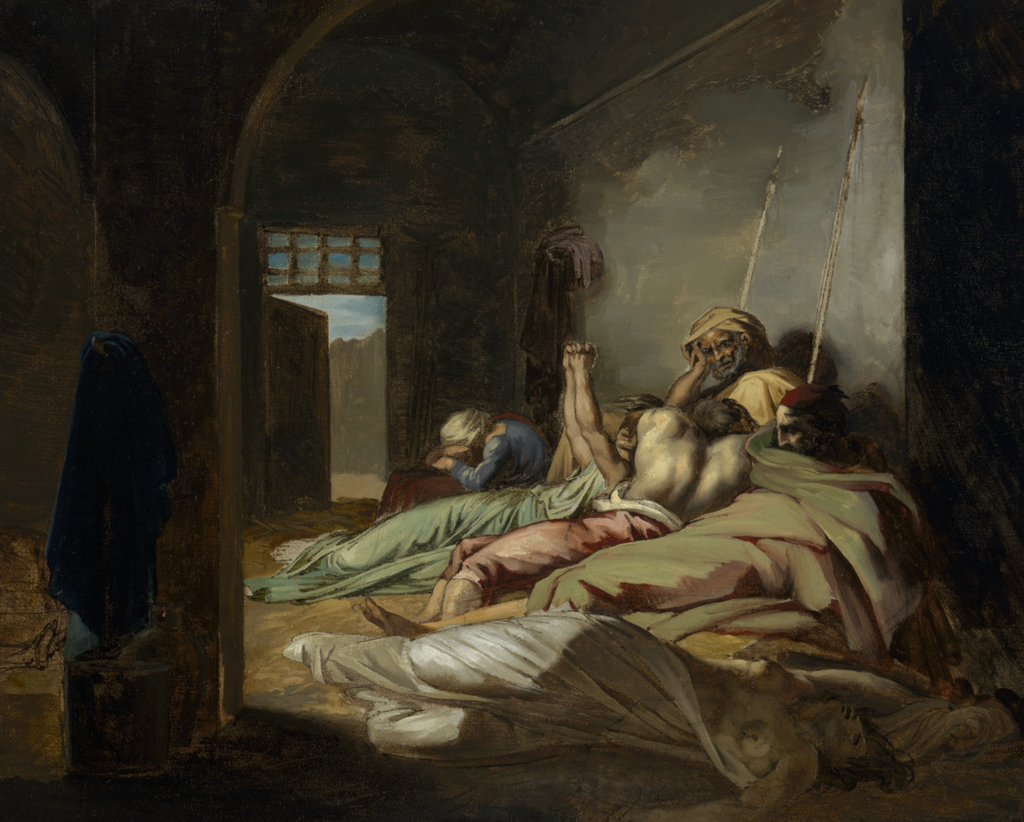
Stricken by tropical fevers, the port of Cádiz illustrates the devastating effects of yellow fever brought by ships.
6. A Navigational Anecdote
“He shall make successive stopovers at Funchal, on the island of Madeira, and at Praya, on the island of St. Jago. He shall take on board a few casks of wine at the former port, and replenish his water and firewood supplies at the latter, where he may also obtain some fresh provisions. With regard to Praya, however, he shall ensure that his stay there is as short as possible, since the climate is very unhealthy during the season in which he will be calling there.”
Louis XVI, Plan of the Voyage
Although the instructions drawn up by Louis XVI explicitly called for a stopover at Praya, on the island of Santiago, to replenish the ships’ supplies of water and firewood, the king himself had added a warning about the unhealthy climate. Faced with the realities on the ground and the health risks posed by the tropical rainy season, Lapérouse chose to forgo this stopover. Prioritising the health of his sailors — which he described in his logbook as “the greatest of all blessings” — he made the pragmatic decision to sail directly towards the South Atlantic without anchoring in Cape Verde, thereby avoiding exposing his crews to the deadly fevers associated with the rainy season.